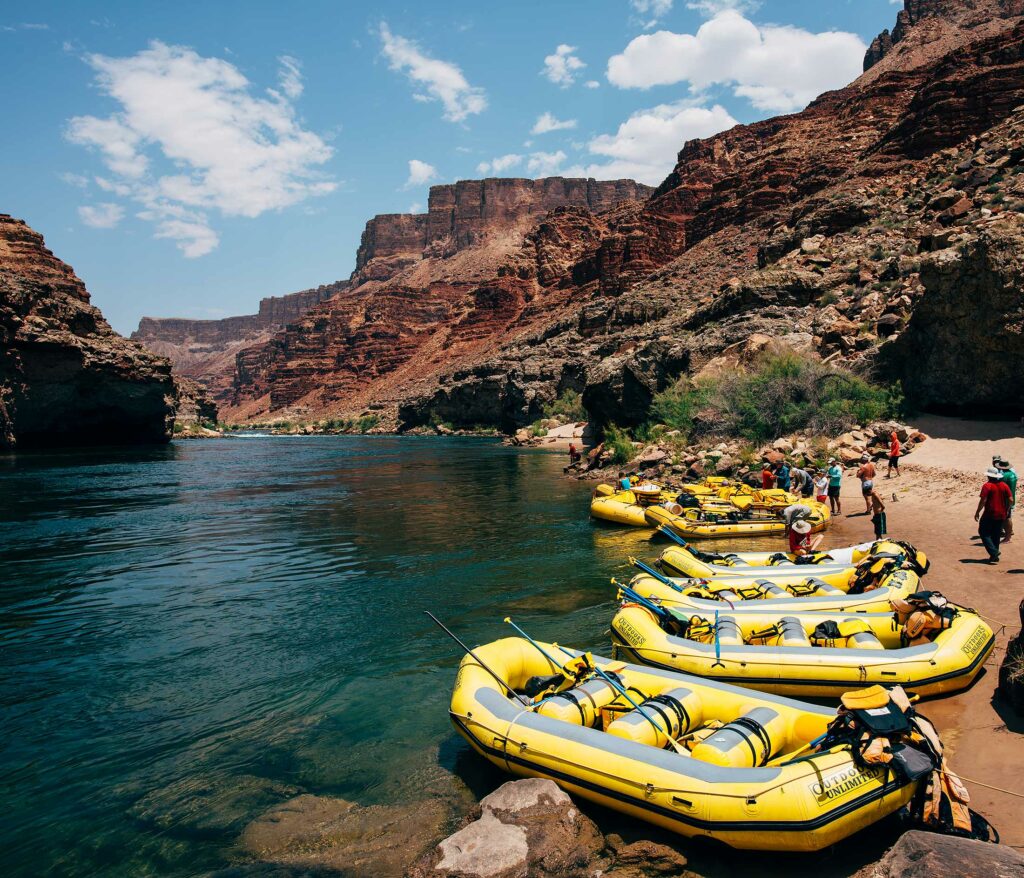
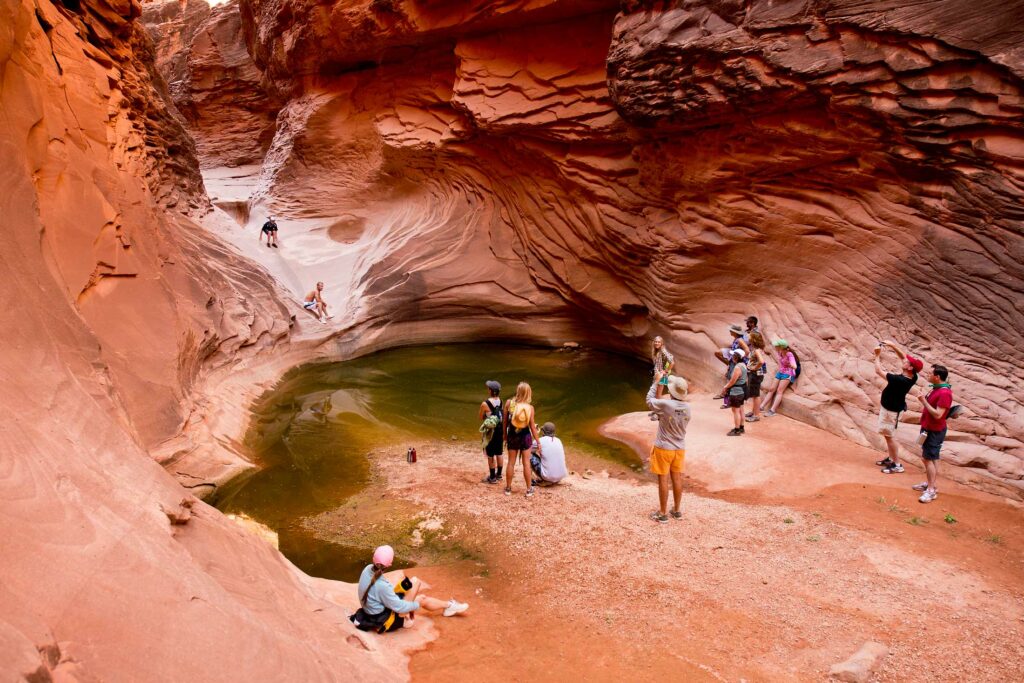
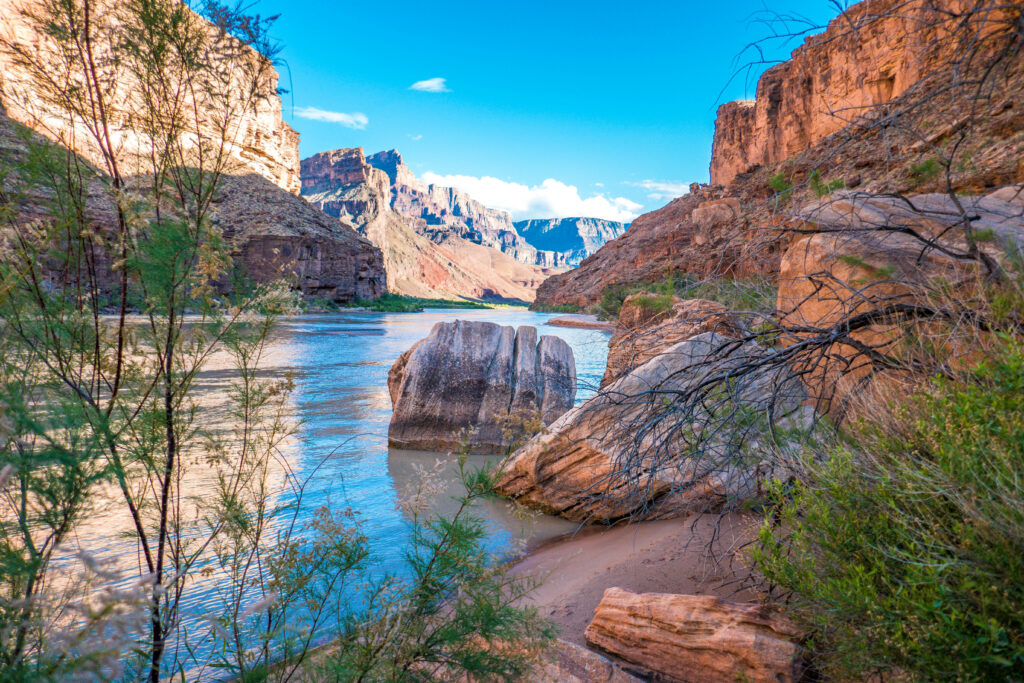
For many, a rafting trip thru the Grand Canyon offers a magical first: sleeping on the ground, under a sky full of stars. While it’s a breathtaking experience to lie on your pad and watch constellations drift by, getting a good night’s sleep is essential to fully enjoy your days on the river. Here’s your ultimate guide to sleeping outdoors comfortably, with tips tailored for Grand Canyon campers — but useful anywhere you’re sleeping under the open sky.
1. Pick the Right Sleeping Spot
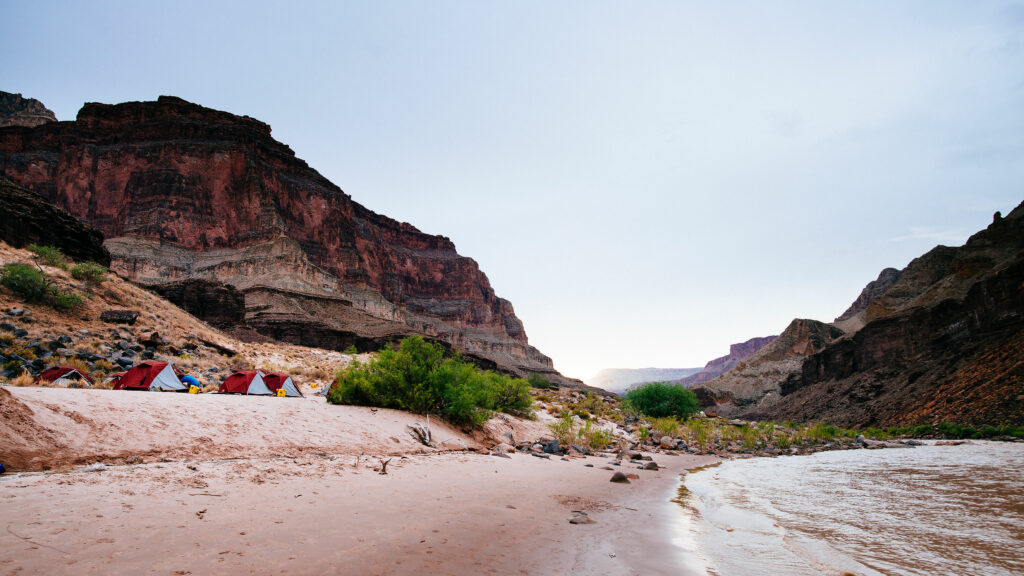
A good night’s rest starts with your location. Find an established campsite with flat ground or sandy areas that you can smooth out. Avoid uneven terrain, rocks, or slopes. Use your hand or paddle to flatten the area for your pad. Side sleepers can dig a shallow hip divot for extra comfort.
Avoid red ant hills — Red ants have an excruciating bite. Gratefully, the ants go to sleep at night, so we don’t have to worry about them on us or our bags while we sleep. However, it’s still best to not set your tarp over their doorway.
2. Set Up a Cozy Sleep System
We provide:
- A ground tarp. Weigh the corners with rocks or bags so the wind doesn’t blow it away.
- A quality sleeping pad. Lay your sleeping pad in the middle or on one side of your ground tarp. You can fold your tarp over it to keep it dry or sand-free prior to unpacking your sleeping bag.
- A sleeping bag. Don’t unpack it until you’re ready for bed to keep it sand-free and critter-free.
- A sleeping bag liner. Used to enhance hygiene, your liner helps to absorb odors and can also be used on top of your sleeping bag on particularly warm nights.
You’ll want:
- A lightweight, inflatable travel pillow – trust us, a wadded-up shirt won’t cut it.
Want to stay extra cool? Dip in the Colorado River before bed or drape a damp sarong around your neck. Proximity to canyon walls may keep the heat around longer, so expect warm nights in some spots.
3. Critter-Proof Your Camp
From ringtail cats to packrats and curious ravens, desert critters love unattended gear. Never leave your food or belongings out overnight. Keep everything packed and zipped until use, especially your sleeping bag — you don’t want to share it with unexpected guests.
4. Block Out Noise and Light
River camps can be surprisingly loud or eerily silent. Some campsites are serenaded by rushing rapids, others are so quiet you’ll hear every snore across camp. Ear plugs can be a great solution for group camping.
If you’re camping during a full moon, the brightness can feel like a spotlight in your face. A neck gaiter, bandana, or sleep mask works well to block out the light for a more restful night.
5. Prepare for Wind and Weather
Even in dry weather, wind can be a major factor. If you’re using a tent, stake it down well — strong gusts have launched tents into the river, gear and all. For open-air sleepers, a buff or neck gaiter can shield your face from blowing sand and help control hair tickles.
6. Plan for Nighttime Needs
Before bed, give your feet some love — moisturize and treat any blisters or hot spots. Keep these items within reach:
- A headlamp or flashlight
- A water bottle
- A clear path to the pee bucket or river
To reduce nighttime wake-ups, hydrate earlier in the day and try to use the bathroom before sleeping. Trust us — you won’t sleep well with a full bladder.
7. Sync With Nature’s Clock
In the canyon, most folks wind down at dusk and rise at dawn. It’s the best way to maximize daylight and your adventure time. Plus, the more active your day, the more likely you are to fall asleep fast.
Final Thoughts: Sleep Under the Stars Like a Pro
Camping in the Grand Canyon is about embracing nature — and that includes sleeping on the ground under a canopy of stars. With the right setup and a few smart tips, you’ll rest easy and wake up refreshed for another day of exploration.
So pack smart, sleep soundly, and let the stars be your ceiling and the river your lullaby. Sweet river dreams!
Heather Snow
Grand Canyon River Guide